
Last updated November 16, 2026
 Kitchen remodeling
 Bathroom remodeling
 Home additions & ADU
 Roofing
 Windows & doors
 Driveway & pavers
 Fence
Free written scope consultation - allowances, timeline, and change-order rules on paper before a single trade is scheduled
How to Hire a Construction Contractor in Hayward: A Step-by-Step Guide
Most advice about hiring a contractor tells you to get three bids and read reviews. That advice quietly assumes every bid covers the same work. In Hayward, it usually doesn’t. One quote bundles demolition and haul-off; the next leaves both for you to arrange. One includes permit procurement; the next hands you a stack of forms. You then compare bottom lines that were never comparable in the first place, and the cheapest number often belongs to the bid with the most holes in it. This guide teaches you to read what a contractor is actually committing to, how to verify a California license by classification, and how to build a payment schedule that protects your house and your money.
Quick Answer
To hire a construction contractor in Hayward, verify the contractor’s CSLB license number and classification against your project type, demand a written scope that itemizes demolition, haul-off, permit procurement, and inspection coordination, and tie every payment to a completed inspection milestone rather than a calendar date. Keep upfront deposits at 10% or less, and confirm the contractor can integrate multiple trades under one contract if your project touches more than one scope. A complete bid is worth more than a cheap one.
Styles & brands we work with
- Kitchen remodeling
- Bathroom remodeling
- Home additions & ADU
- Roofing
- Windows & doors
- Driveway & pavers
- Fence
Table of Contents
- Step 1: Verify the License and Understand What the Classification Means
- Step 2: Demand the Bid Line Items Everyone Leaves Out
- Step 3: Read the Red Flags Specific to Hayward’s Contractor Market
- Step 4: Decide Whether You Need One Contractor or Five
- Step 5: Structure a Payment Schedule Around Inspections
- Step 6: Run the Walkthrough So the Scope Comes Out Right
- Step 7: Read the Contract Before You Sign It
Step 1: Verify the License and Understand What the Classification Means
Every licensed contractor in California holds a number issued by the Contractors State License Board, and that number tells you more than whether the license is active. It tells you which kinds of work the contractor is legally allowed to perform. Pull the number up on the CSLB website before you take a bid seriously, and read the classification line, not just the status.
Here’s where homeowners get caught. A handyman can legally take on a job under $500 without a license. Many unlicensed operators exceed that threshold anyway, and the homeowner often doesn’t find out until a failed inspection or a lien lands on the property. A mechanics lien is the part that stings: if an unlicensed or underlicensed contractor doesn’t pay a supplier or a subcontractor, that party can record a claim against your house even though you paid your contractor in full.
The classifications that matter most for Hayward residential work:
- B-General Building Contractor. The broad license for whole-home and multi-trade projects. A B license holder can take a project that involves two or more unrelated trades, which is what most renovations actually are.
- C-8 Concrete. Covers driveways, slabs, and hardscape foundations. A paver driveway sitting on a properly compacted base is concrete-adjacent work, so ask who holds the C-8 when the driveway is part of the scope.
- C-27 Landscaping. Covers planting, irrigation, and much of the softscape and hardscape surrounding a fence line or a patio.
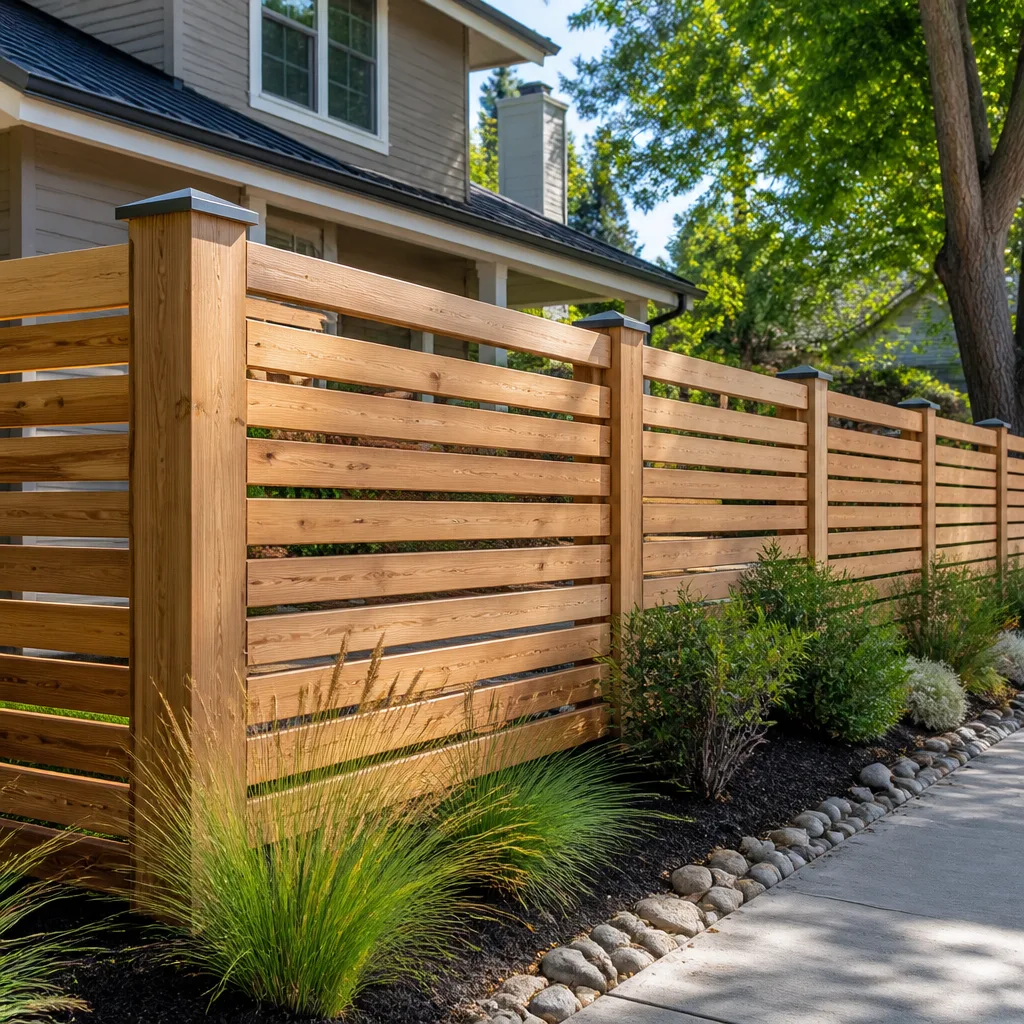
- C-13 Fencing. Dedicated fence contractors hold this. Fence work looks simple until a property-line fence has to sit on a slope, meet a setback, or anchor into soil that’s been graded twice.
- C-39 Roofing and C-36 Sheet Metal. Roof replacements and the flashing that keeps water out of a wall assembly.
A general contractor coordinating a full-scope project will carry the B license and either hold or subcontract the trade-specific classifications. Ask which of these live in-house and which are subbed out. The answer shapes both the price and the accountability. In Hayward, where a lot of housing stock mixes older single-story homes with infill construction, the classification question comes up often, and a contractor who can answer it plainly is one who’s thought about it before your project.
Step 2: Demand the Bid Line Items Everyone Leaves Out
Two bids can differ by thousands of dollars and still describe the same finished room, because one included the four items nobody wants to talk about and the other didn’t. Before you compare a single number, put both quotes side by side and check that each contains these line items as separate, itemized lines:
- Demolition. Tearing out the old driveway, fence, roof, or kitchen isn’t free, and it isn’t automatically included. Ask explicitly whether demo of the existing surface is in the scope.
- Haul-off and disposal. Debris has to leave the property and go to a transfer station. Dumpster rental, hauling labor, and disposal fees are frequently omitted or listed as “allowance” line items that balloon later.
- Permit procurement. Who pulls the permit, who pays the permit fee, and who is named on it. Most cities require a permit for structural work, roof replacements, additions, and electrical or plumbing changes, so call Hayward’s building department and ask what your specific project needs before the bid arrives.
- Inspection coordination. Somebody has to schedule the rough-in and final inspections and be on site for them. If that somebody isn’t the contractor, it’s you, and your schedule just took on a second job.
- Protection and cleanup. Floor protection, dust barriers, and a final clean are real labor. A bid that omits them isn’t cheaper; it just moves the cost to your time.
- Change-order policy. How surprises get priced once the walls are open. Get the answer in writing before you sign.
If a contractor can’t or won’t break the bid into these lines, that’s your answer. A detailed quote takes more effort because it reflects a contractor who has actually planned the job. The same rule applies whether you’re pricing a driveway & pavers job or a full kitchen: the scope, not the headline number, tells you what you’re buying.
Step 3: Read the Red Flags Specific to Hayward’s Contractor Market
Some warnings are universal, but Hayward has its own patterns worth naming. The market here draws crews from across the East Bay and beyond, and a few tells separate the contractors who genuinely work in this city from those passing through.
- Out-of-area crews with no local permit history. Ask how many permits the contractor has pulled in Hayward specifically. A contractor who does regular work here can speak to the city’s inspection timelines and what the plan reviewer tends to flag. One who can’t is learning the local process on your dime.
- Bids that arrive within hours of a walkthrough. A real scope takes time to build. A quote fired off the same afternoon almost always reflects a template, not your house. Expect a day or two for a proper written bid.
- Payment demands above 10% upfront. California limits the down payment a licensed contractor can ask for a home improvement project to 10% of the contract price or $1,000, whichever is less. Any contractor who wants a third of the contract before a shovel hits the ground is either unaware of the rule or ignoring it.
- Cash-only, no written contract. You want your name, the work description, materials, schedule, and payment terms on paper. No exceptions.
- Pressure to skip the permit. A phrase like “we don’t need to pull for this” is a signal that the contractor would rather not have the work inspected. That’s exactly when you want it inspected.
- No verifiable product information. When a bid names specific materials, like a Belgard paver or a Bufftech vinyl privacy panel, ask to see the manufacturer spec sheet and the warranty terms. Specificity is a sign the contractor has done this before.
None of these flags is proof of bad faith on its own. But two or more together are a reason to move on. There are plenty of qualified contractors in Hayward; you don’t have to work around a stack of small warnings.
Step 4: Decide Whether You Need One Contractor or Five
A typical Hayward renovation touches several trades: a driveway, a fence, a roof, a kitchen, maybe an addition. You have two ways to buy that work. One is to hire a specialist for each scope. The other is to hand the whole project to a single contractor who coordinates the trades under one contract. The standard advice pushes you toward specialists, and there’s a real case for it when the job is narrow. For a project that crosses multiple scopes, it usually creates more work than it saves.
Here’s what happens with five specialists. You become the project manager. You take the calls, sequence the crews, decide whose work has to finish before whose can start, and handle the moment a fence installer and a concrete guy disagree about who owns the property line. You didn’t sign up for that role. It came free with the bids.
The alternative raises a fair question, though: how do you know a full-scope contractor can actually integrate the trades and isn’t just the one person you call to reach five other people? Ask these questions:
- Which trades are in-house and which are subcontracted? There’s no wrong answer here, only a wrong answer for the project. A general contractor with an established subcontractor roster can be a stronger integrator than one trying to do everything alone.
- Who is my single point of contact during construction? One name, one project manager, one warranty conversation at the end. If you’d be coordinating multiple offices, you’re back to project manager again.
- How do you sequence trades that touch each other? The roof affects the siding, and the siding affects the window openings. A contractor who can explain the order of operations has done this before.
- What’s the warranty structure across all the trades? One conversation or five? The answer tells you who owns problems after the punch list is closed.
- Do you maintain relationships with specific manufacturers? When a contractor is authorized to install and warranty products from established brands, that gives you material options instead of the one brand they happen to stock.
That last point matters more than it sounds. If your project includes a fence installation, the fence brand choice matters as much as the install. Aluminum ornamental, vinyl privacy, and steel all demand different approaches, and a contractor with brand relationships across Jerith, Bufftech, ActiveYards, and similar manufacturers can match the product to your property instead of whatever’s cheapest that week. If your project grows into an home additions & ADU, the integration question gets even more serious, because additions touch foundation, framing, electrical, plumbing, and finishes in one project. Prefab and modular partners like Abodu, Dvele, Mighty Buildings, and Boxabl can shorten timelines and widen the budget range, but the site prep and finish scope still have to be coordinated by someone. That someone should not be you.
Step 5: Structure a Payment Schedule Around Inspections
The single most protective thing you can build into a construction contract is a payment schedule tied to inspection milestones rather than calendar dates. A schedule that says “30% on May 15” gives the contractor money for work that may not be done. A schedule that says “25% on completion of framing inspection” ties every dollar to a verified step.
The structure:
- Down payment. Capped at 10% or $1,000, whichever is less, per California home improvement contract rules for a licensed contractor.
- Milestone payments. Every subsequent disbursement follows a completed, inspected phase: demolition and rough-in, framing, mechanical and electrical rough-in, finished surfaces, final inspection, punch list sign-off.
- Retainage. Hold a final chunk, typically somewhere in the range of 5% to 10%, until the punch list is closed and the final inspection passes.
- No payment for unshipped material. Pay for materials when they’re delivered to your property, not before.
- Written change orders only. Any scope addition between milestones is priced and signed before work continues.
One more thing in this step: lien releases. Ask for a conditional lien release tied to each payment and a final unconditional release at closeout. This is the document that proves your property is clear of claims from suppliers and subcontractors when the project ends.
Build the milestones with your contractor, not against them. A contractor confident in their work will welcome a schedule tied to inspections because it demonstrates they expect to pass them. If a contractor objects to inspection-based payments, ask why. The answer is usually informative.
Step 6: Run the Walkthrough So the Scope Comes Out Right
The site visit is where scope gets settled, and it’s also where a lot of it gets skipped. A good walkthrough takes an hour or more for a multi-scope project. A rushed one takes fifteen minutes and produces a bid that misses half of what the walls were hiding.
Here’s how to prepare so the walkthrough produces an accurate bid:
- Write down every scope, even the small ones. Trim work around the new window, the paint touch-up where the fence meets the house, the outlet that needs to move. Small items are the ones most often left off.
- Walk the property with the contractor. Don’t hand them a list at the door. Move through each area together and talk through what happens there.
- Ask about the existing conditions. What’s under the driveway? What does the fence post anchor into? Is the roof over or under the original thickness of shingles? What kind of wiring runs to the kitchen? An experienced contractor will look for these on site.
- Ask what would surprise them. A contractor who has done this before will name two or three things that could go wrong and how they price them. A contractor who says nothing ever surprises them hasn’t looked closely enough.
- Ask how the permits work. Most cities require permits for structural, electrical, and plumbing changes. Hayward’s building department can tell you what your specific scope triggers. A contractor who already knows the answer has done it here.
- Confirm who handles protection and cleanup. Floor coverings and dust control protect the parts of the house not under construction.
When the walkthrough is thorough, the bid is thorough. When it’s rushed, the gaps surface during construction, and they cost more to fix then than they would have to price up front.
Step 7: Read the Contract Before You Sign It
The written contract is the project. Everything you discussed in the walkthrough and the bid needs to be in it. California requires home improvement contracts to be in writing when the project exceeds $500, to include the contractor’s license number, and to include a three-day right to cancel. Read the contract with those requirements in hand, and check that these specific items appear:
- Contractor’s name, address, and license number. All three, in writing, on the contract itself. Cross-check the license number against your earlier CSLB verification one more time.
- Complete scope of work. Every line item from the bid you reviewed, including demo, haul-off, permit procurement, and inspection coordination.
- Materials specified by brand and model. “Similar quality” is a phrase that lets a contractor substitute whatever’s available. If the bid names GAF or CertainTeed or Owen Corning for the roof, the contract should too. If it names KraftMaid or Wellborn for the kitchen cabinetry, the contract should too. Brand specifics protect both sides.
- Schedule with milestones. Start date, key phase completion, final inspection target. Allow for weather and inspection schedules without turning the whole timeline into a guess.
- Payment schedule by milestone. The one you built in Step 5, written into the contract line for line.
- Change-order process. How changes get priced and approved, in writing.
- Warranty terms. Workmanship and product warranty, both stated clearly. Brand-authorized warranties may differ from what the contractor provides, so ask for both.
- Three-day right to cancel. Required for home improvement contracts over $500 in California. Don’t let anyone talk you out of taking the time.
Sign nothing you don’t understand. A legitimate contractor will answer questions about the contract without impatience. If they push you to sign on the spot, that’s the same red flag as a bid delivered two hours after the walkthrough.
Common Mistakes to Avoid
- Comparing bottom lines without comparing scopes. A $2,000 lower bid that omits demo, haul-off, and permit procurement isn’t $2,000 cheaper. It’s the same project, priced by someone who walked away from half the work.
- Skipping the CSLB verification. The license number is on the contract, but that only helps if you use it. Check the number and the classification before the deposit check clears, not after.
- Hiring an unlicensed handyman for a job that crosses the $500 threshold. Small residential projects feel like handyman work. But once a permit is required or a lien possibility exists, the license stops being paperwork and becomes the mechanism that protects your house.
- Paying for the job, not for the milestones. A calendar-based payment schedule pays a contractor to keep the schedule, not to keep the quality. Milestone-based payments pay for what’s actually built.
- Treating a multi-scope project like a series of small single-trade jobs. A driveway, a fence, and a roof replacement on the same house share site conditions and sequencing. Hiring three contractors means the project manager is you.
- Accepting “similar quality” in the contract. If the bid specified Belgard pavers or ActiveYards fence panels, the contract should still specify them. Vague language at signing becomes surprise substitutions during the build.
- Waving through a rushed walkthrough. A fifteen-minute look at a kitchen that will be gutted doesn’t find the old plumbing or the wiring that needs to move. That’s a change order you could have priced up front.
See the difference
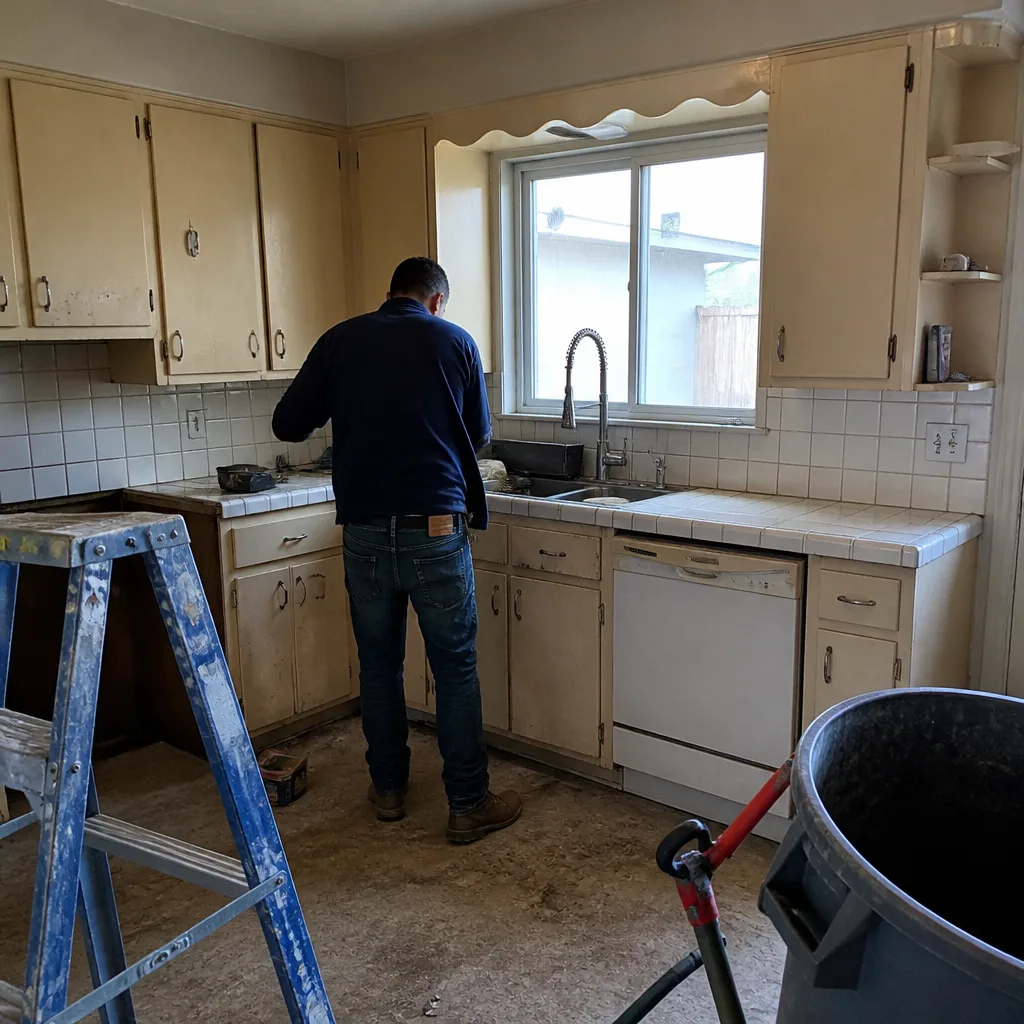 Before
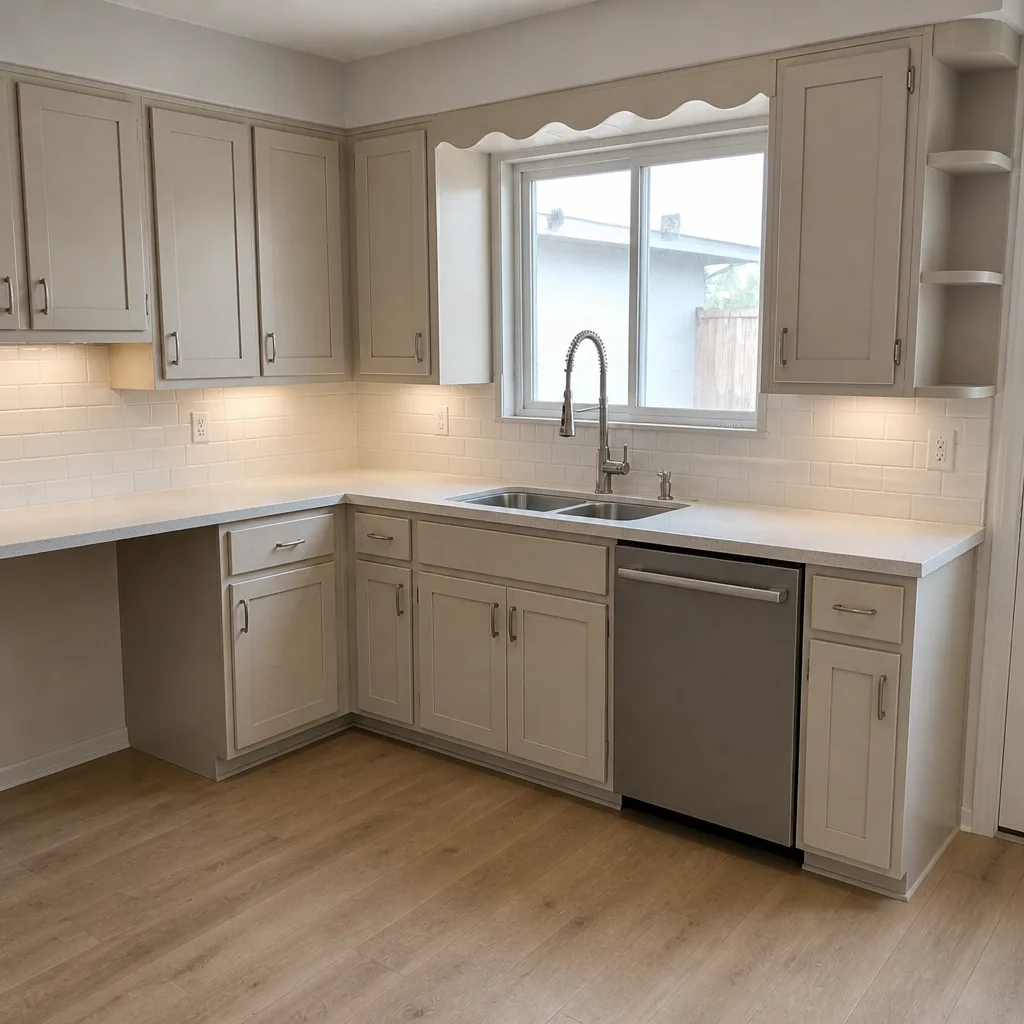 After
 Before
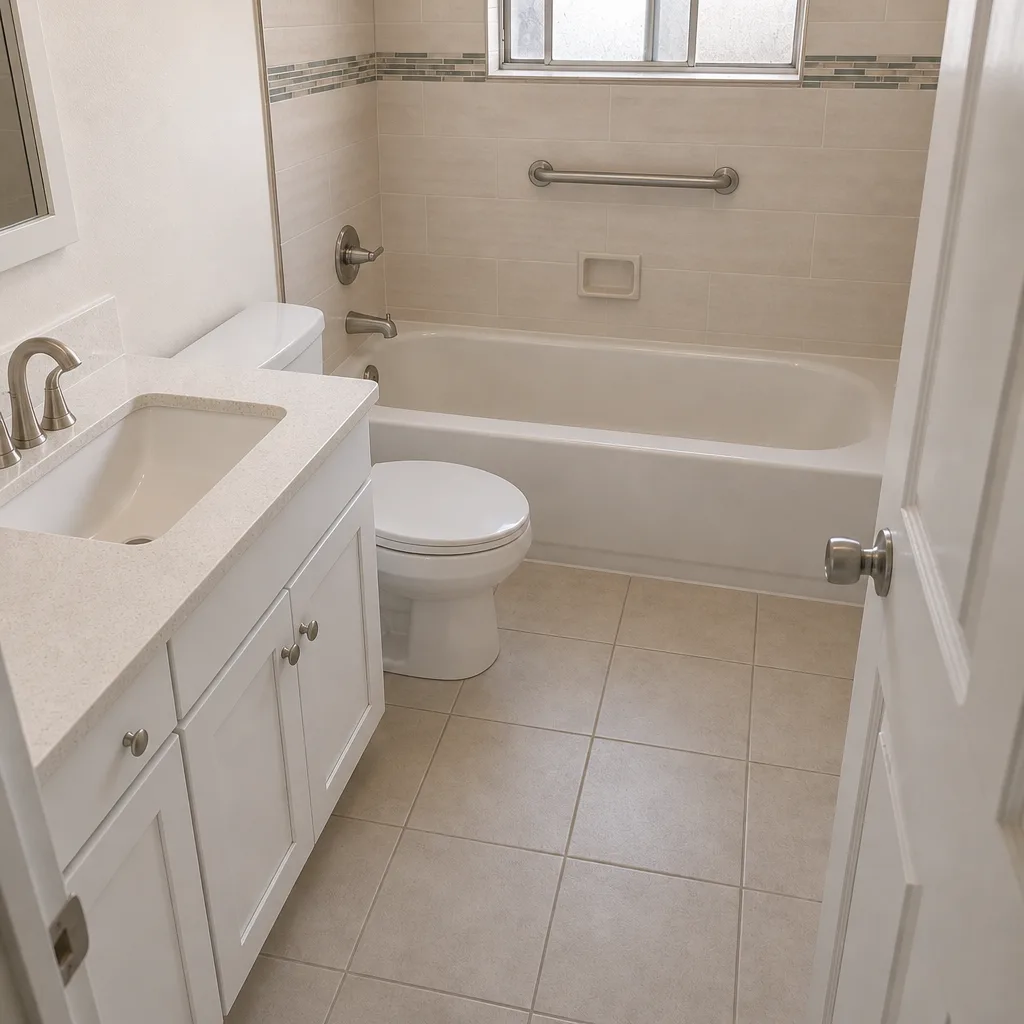 After
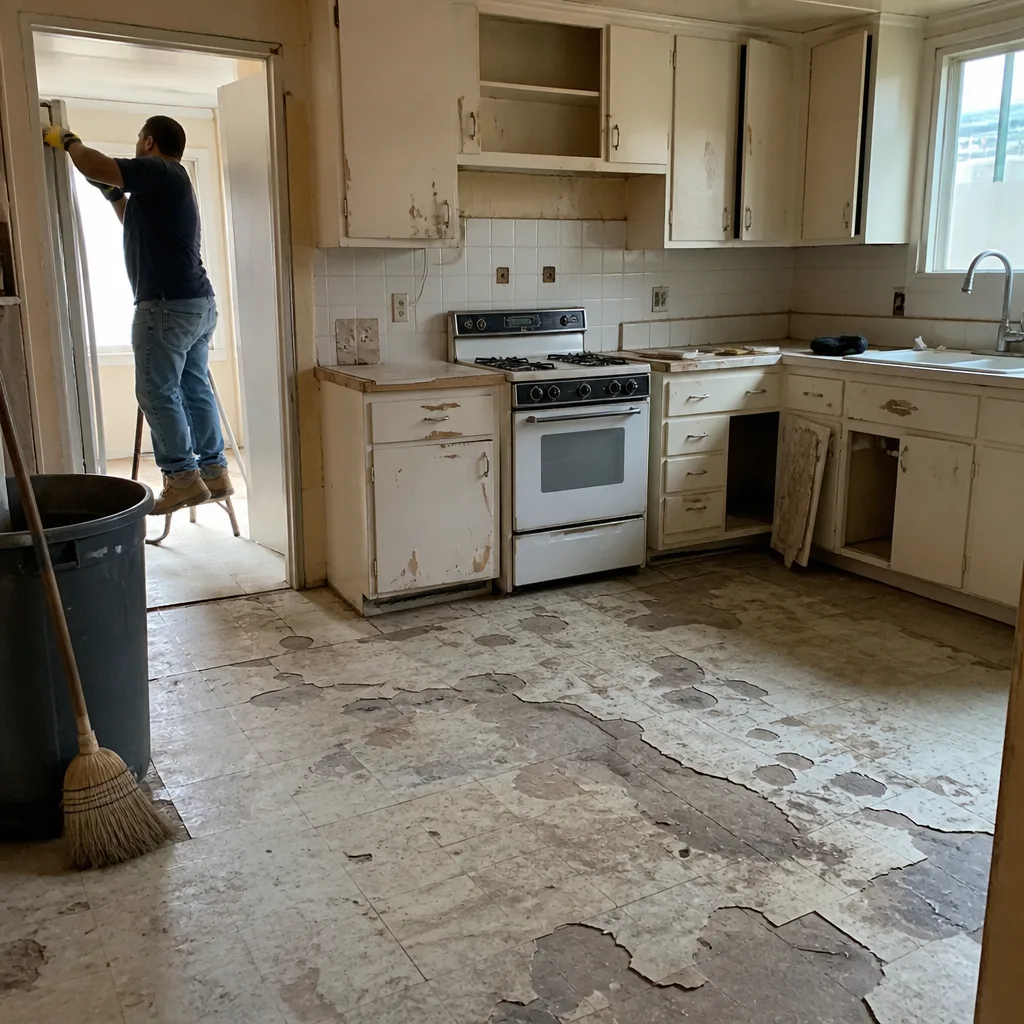 Before
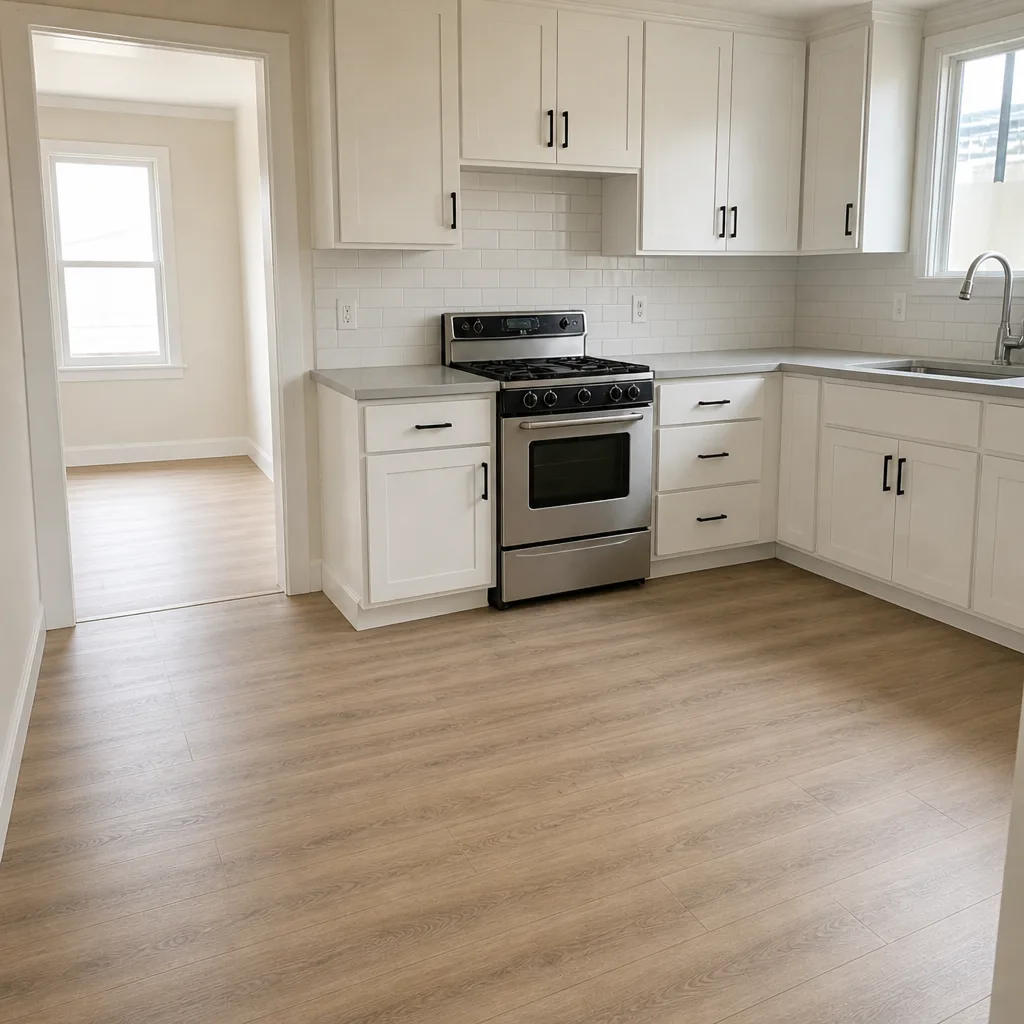 After
When to Call a Professional
Some projects are yours to take on. Swapping a faucet, patching drywall, repainting a room: those are reasonable homeowner jobs. The moment a project crosses into permits, structural work, gas lines, or electrical panel changes, it’s time for a licensed professional. High-tension garage door springs and any work inside an electrical panel are the two most common danger spots homeowners get injured on; those belong to someone trained for them. A roof replacement, an addition, an ADU, a kitchen or bathroom remodel that moves plumbing: all of these need a contractor who can pull the permit, pass the inspection, and stand behind the warranty.
If your project involves multiple trades and you’re not looking for a second job coordinating schedules, a single full-scope contractor simplifies everything. Construction Hayward offers free estimates in Hayward. Call (833) 510-5312. We answer 24/7. Fast dispatch from 7am to 7pm, Sunday through Friday. Our technicians have up to 11 years of experience, and we work with brand manufacturers across every trade we cover.
Frequently Asked Questions
Look up the license number on the Contractors State License Board website, then read the classification line along with the status. A B-General license covers multi-trade whole-home and renovation work. The C-8, C-27, C-13, C-39, and C-36 classifications each cover a specific trade. The license number should appear in writing on your home improvement contract as well. If the license can’t be verified or the classification doesn’t match the work, don’t sign. Call (833) 510-5312 for a free estimate on a project you’d like priced by a licensed contractor.
California caps the down payment a licensed contractor can collect on a home improvement contract at 10% of the contract price or $1,000, whichever is less. That’s a rule, not a suggestion. Any contractor who asks for 30% or 50% up front is asking you to accept risk the law doesn’t require you to accept. Structure the rest of the payments around completed inspection milestones with a final retainage held until the punch list is closed. Call (833) 510-5312 for a written estimate with a milestone payment schedule.
Often, yes. Most cities require a permit for structural work, roof replacements, and any work that changes grade, drainage, or property line conditions. A fence replacement on an existing line doesn’t always require one, but a fence on a slope or one that changes the property boundary might. Call Hayward’s building department with your specific scope before the bid arrives so you know what to ask for. A contractor who does regular work in Hayward can usually tell you before you ask. Call (833) 510-5312 for a free estimate that includes permit procurement as a line item.
Scope, not price. One bid included demolition, haul-off, permit procurement, inspection coordination, and material protection. The other left some or all of those for you to arrange separately. When you add the missing items back in, the bids usually land within a normal range of each other. The fix is to demand itemized bids before you compare numbers, not after. Call (833) 510-5312 for a line-item written bid on your project.
A full-scope general contractor with a B license can handle projects that span multiple trades, either with in-house trades or with an established subcontractor roster. The advantage is one contract, one project manager, and one warranty conversation, instead of three schedules to coordinate. The questions to ask are which trades are in-house, which are subcontracted, who’s the single point of contact, and how warranty claims get handled across all the work. Call (833) 510-5312 to schedule a free estimate on a multi-scope project.
A bid that arrives the same afternoon as the walkthrough. A real scope takes time to build. Same-day bids usually reflect a template rather than your house, and the scope omissions surface as change orders during construction. Pair that with a payment demand above 10% upfront or a pressure to skip the permit, and you have enough reasons to move on. There are plenty of qualified contractors in Hayward; there’s no reason to work around warnings. Call (833) 510-5312 for a free estimate from a contractor who takes the time to build the scope.
The Bottom Line
Hiring a contractor in Hayward comes down to three things: verify the license and the classification against your project type, read the scope line by line before comparing numbers, and tie every payment to an inspection milestone. Three bids and a stack of reviews won’t protect you if the bids weren’t comparable to begin with. The cheapest bid is often the one with the most omitted scope. And if your project spans multiple trades, a single full-scope contractor saves you from taking on a project manager role nobody priced in. Construction Hayward is a full-scope residential contractor with the trades, brands, and certifications to handle the whole project under one contract. Call (833) 510-5312 for a free estimate. We answer 24/7. Fast dispatch from 7am to 7pm, Sunday through Friday. See our work and full scope at Construction Hayward.
Written by the team at Construction Hayward.