
Last updated November 16, 2026
 Home additions & ADU
 Kitchen remodeling
 Bathroom remodeling
 Roofing
 Windows & doors
 Driveway & pavers
 Fence
Free written scope consultation - allowances, timeline, and change-order rules on paper before a single trade is scheduled
Construction Warning Signs: A Hayward Homeowner’s Reference Guide
A hairline crack in drywall usually means nothing. The same crack that widens a little more every season, runs diagonally from a door corner, or shows up mirrored on the opposite wall is telling you the foundation is moving. The difference between those two situations is not luck. It’s pattern, location, and timing. Most of the warning signs that cost Hayward homeowners the most money are visible long before the failure everyone notices, but they show up in small, easy-to-miss places: a bubbling paint edge near the ceiling line, a fence post leaning the same way every year, a paver that rocks when you step on it. This guide trains you to read those early signals across every part of the house and yard, from the roof down to the driveway.
Quick Answer
Construction warning signs in a Hayward home fall into four categories: movement (cracks, sticking doors, out-of-level floors), water intrusion (attic condensation, paint bubbling, roof stains), soil-related failure (leaning fences and retaining walls, sunken pavers), and material wear (granule loss, corroded hardware, failing caulk lines). Read them by pattern and location, not by size alone. A small sign that keeps growing is more serious than a large one that never changes. Photograph what you see on a regular schedule so you have a baseline to compare against.
Styles & brands we work with
- Kitchen remodeling
- Bathroom remodeling
- Home additions & ADU
- Roofing
- Windows & doors
- Driveway & pavers
- Fence
Table of Contents
- How to Read Crack Patterns in Walls and Foundations
- Roof Warning Signs You’ll See Inside the House First
- Fence and Retaining Wall Failure in Hayward’s Clay Soil
- Driveway and Paver Problems: Base Failure vs. Surface Wear
- Windows, Doors, and Glass: Signs That Go Unnoticed
- Interior Systems That Announce Trouble Before They Fail
- How to Document Warning Signs Over Time
- Warning Signs Around Additions and ADU Projects
How to Read Crack Patterns in Walls and Foundations
The direction a crack runs tells you what kind of force is behind it. A vertical crack that stays the same width for years is usually harmless settling. A diagonal crack that widens as it travels, a stair-step crack through masonry, or a horizontal crack in a foundation wall is a different story, and each points to a different failure mechanism.
Diagonal cracks
Diagonal cracks that start at the corner of a door or window opening and angle upward or outward typically indicate differential settlement. One part of the foundation is dropping or heaving faster than another. In Hayward’s expansive clay soils, seasonal moisture swings push and pull on foundation edges constantly, and a diagonal crack that opens and closes with the seasons is the classic signature.
Stair-step cracks
In brick or block walls, a crack that steps along the mortar joints like a staircase usually follows the weakest path through the wall. This pattern often tracks movement concentrated near one corner of the foundation. It’s one of the patterns worth photographing with a ruler or coin for scale so you can measure change over months.
Horizontal cracks
A horizontal crack in a foundation wall, especially one that bows inward, points to lateral soil pressure against the wall. This is the one pattern that rarely resolves on its own and should get a professional evaluation promptly rather than being watched for a year.
- Vertical, stable width: usually normal settling; monitor once or twice a year.
- Diagonal from a corner: differential movement; measure and photograph seasonally.
- Stair-step in masonry: settlement along a corner or edge; document closely.
- Horizontal with bowing: lateral soil pressure; call a professional soon.
- Cracks mirrored on opposite walls: structural movement rather than cosmetic cracking.
We’ve seen enough Hayward houses to know that the corner near a garage slab and the wall above a front porch step are the two places these patterns show up first.
Roof Warning Signs You’ll See Inside the House First
By the time shingles look bad from the street, moisture has often been finding its way into the attic framing for months. The earliest roof warnings in a Hayward home usually appear indoors, where you’re not used to looking.
Attic condensation and compressed insulation
If the underside of the roof sheathing looks dark or damp, or frost forms on rafters on cold mornings, warm moist air is escaping from the living space and condensing against the cold roof deck. Compressed insulation in the same area, where it’s been crushed flat near the eaves, tells you air sealing and ventilation are both struggling. That combination is a slow-burn problem that can lead to rot long before a shingle fails.
Paint bubbling near the top plate
Bubbling or blistering paint along the interior wall just below the ceiling, near where the wall meets the top plate, is often a hidden moisture sign rather than a paint problem. Water wicking down from an attic leak or a roof detail failure lifts paint from the inside. Repainting over it just resets the clock.
- Check the attic once a season. Look at the sheathing, the rafters, and the insulation near the eaves for dark staining or condensation.
- Note any paint bubbling along interior walls near the ceiling line and photograph it before it’s patched.
- Look for daylight showing through the roof deck in the attic; that’s a direct opening for water.
- Inspect the flashing around chimneys, vents, and skylights after the first big rain of the season.
- Track granule buildup in the gutters; a sudden change in granule volume often precedes visible shingle wear.
Roofing is where brand choice really matters. We work with GAF, CertainTeed, and Owens Corning because each offers different warranty structures and product tiers, and a straightforward repair tier exists across all of them.
Fence and Retaining Wall Failure in Hayward’s Clay Soil
Hayward’s expansive clay soil is the single biggest driver of fence and retaining wall failure in the area. Clay holds water, swells, and pushes outward against anything embedded in it. That means the earliest warning signs show up in specific places, and knowing where to look saves you from replacing a whole run when you only have a problem at one post.
Lean direction
A single leaning post is usually a local issue: a failing footing or poor drainage at that post. A run of posts leaning in the same direction tells you soil pressure is moving the whole line. Watch which way they lean. Lean toward the low side of the yard or away from a slope usually points to soil movement or inadequate drainage controlling the failure.
Post base corrosion
At the ground line, where the post meets the concrete or the soil, look for rust staining or flaking on steel posts and brackets. Corrosion starts where water sits, and a post that’s failing at the base is one that will snap long before the pickets fail. If you’re choosing new material, Barrette offers aluminum and vinyl options that hold up better than untreated steel at grade.
Weep hole blockage
A retaining wall without functioning drainage is just a dam waiting for pressure to build. If the weep holes along the base of the wall are plugged, or you see soil staining trails where water has escaped, the wall is taking on more load than it should. Blocked drainage is often the first thing to fail before visible wall movement begins.
- Mark leaning posts with a stake and photograph the lean direction every few months.
- Check the base of every post at the soil line for rust or rot before checking the pickets.
- Clear weep holes in any retaining wall and look for soil staining or water streaks.
- Look for horizontal crack patterns in a masonry retaining wall, especially after heavy winter rain.
- Watch for a fence section that stays wet after the rest of the yard dries.
Our fence installation work starts with drainage and footing assessment, because that’s where most Hayward fence failures originate.
Driveway and Paver Problems: Base Failure vs. Surface Wear
Not every faded driveway needs to be replaced, and not every crack needs anything at all. The critical distinction is between surface wear, which is cosmetic, and base failure, which will keep getting worse no matter how the surface looks on top. The two problems demand completely different responses.
Base failure indicators
Paver driveway problems that trace back to the base almost always show the same three signs. The first is rocking pavers: individual stones that move when you step on them, because the bedding sand underneath has shifted or washed out. The second is widespread settlement near the edges or in the middle of the drive. The third is water pooling in depressions after rain and staying for days. All three mean the load-bearing layer beneath the pavers is compromised, and resetting the surface without addressing the base is a waste of money.
Surface wear indicators
Color fading, a slight surface roughness, or minor sand migration from between pavers is normal surface wear. It’s cosmetic and doesn’t threaten the structure. A power wash and re-sanding restores most of the look. The distinction matters because the surface fixes are inexpensive and the base fixes are not, and you shouldn’t pay for one when you have the other.
- Walk the drive slowly and press on each paver. Note any that rock or flex.
- Pour a little water on the drive after a rain and watch where it settles; standing water is a base-failure indicator.
- Compare the paver height near the garage apron with the height further out; significant step-down often means base settlement.
- Inspect the joint sand annually; if it all disappears every year, water is moving through the base faster than expected.
- Photograph the pattern of any cracks or settling to compare season to season.
When a base problem shows up, our driveway & pavers work focuses on rebuilding the sub-base and compaction layer, not just relaying surface stones.
Windows, Doors, and Glass: Signs That Go Unnoticed
A door that sticks in the summer and swings free in the winter is often read as a heat issue. It’s more likely foundation movement moving the frame. Window and door problems are some of the most reliable structural indicators a homeowner has access to, because you use them every day.
What to watch for
- Doors that stick seasonally but not year-round. A pattern tied to moisture or heat usually tracks movement in the walls or foundation rather than the door itself.
- New gaps at the top corners of doors and windows. These show up before a wall crack appears because the frame is less forgiving.
- Fogging inside double-pane glass. A seal has failed; the window isn’t broken but the visible symptom means the insulated unit needs replacing.
- Cracked or scored glass without a clear cause. Movement in the surrounding frame can crack the pane at the edge.
- Conditioned air leaking around frames. Failing seals and caulk let your air conditioning budget escape out the walls.
If glass needs replacement, we work with Mr-Glass for flat and residential glazing, Therma-Tru for entry systems that fit the existing frame, and ViewLux for thermal-broken window units. The brand matters less than the fit; a window or door that doesn’t match the frame opening will exaggerate the movement you’re already seeing.
Handled well, a window replacement is a small job and not a red flag. The red flag is when a door or window suddenly stops fitting and nobody checked the walls around it.
Interior Systems That Announce Trouble Before They Fail
Kitchens and bathrooms have warning signs that aren’t structural but are just as expensive to ignore. In wet rooms, small visible changes almost always trace back to something in the wall, the subfloor, or the plumbing behind the tile.
Bathroom warning signs
- Tile that sounds hollow when tapped points to a failed thin-set or loose bonding over a wet subfloor.
- Grout that’s crumbling along the shower base lets water behind the tile, and Hayward’s clay soil means water that gets past the shower pan has nowhere fast to drain.
- Discoloration at the base of cabinets or behind the toilet is often the first sign of a slow leak under a floor tile.
- Caulk that cracks at the tub to wall joint every few months usually means there is movement in the wall behind it, not just a bad caulk bead.
Kitchen warning signs
- Soft flooring in front of the sink or dishwasher. Water is likely escaping below where you can see it.
- Cabinets that pull away from the wall or doors that no longer align suggest framing movement or a failing substrate.
- Countertops peeling at the edges or seams usually mean the substrate below has been wet.
- Uneven sink cutouts or fixtures that no longer sit flush indicate sagged or warped counter underneath.
We work with KraftMaid and Wellborn cabinets, Cambria, Silestone, and Caesarstone quartz and stone countertops, and Kohler, Moen, Toto, and Grohe fixtures, because knowing which material tier you’re dealing with makes it easier to tell whether a warning sign is a small repair or the start of a real remodel decision. Pulling a vanity away from a damp wall, for example, is a completely different job than replacing the cabinet fronts.
How to Document Warning Signs Over Time
The most useful thing you can do as a Hayward homeowner is build a defensible visual record. A single photo of a crack tells a contractor almost nothing. A series of photos with a stable reference for scale tells them the rate of change, and that’s what separates cosmetic settling from active movement. It’s also what insurance adjusters and contractors need when you’re deciding whether something is a repair or a replacement.
- Pick a fixed reference object. Use a coin, a ruler, or a marked card in every photo of a crack so change in width is measurable.
- Note the date and the location in the file name, not just in your head. Use a consistent naming pattern like “roof-attic-2026-spring.”
- Photograph the same spot every season, even when nothing looks different. The absence of change is data too.
- Take one wide shot and one close-up of every issue so a professional can see context and scale together.
- Record the weather and season when each photo was taken; clay soil movement in Hayward is strongly tied to seasonal moisture.
- Keep the record in one folder or album so you can hand it to a contractor or insurer in one pass.
A well-built photo history often answers the first question a professional asks: “How long has this been going on?” When you have the record ready, the conversation moves faster and the quote is likely more accurate.
Warning Signs Around Additions and ADU Projects
If you’re considering an addition or an ADU in Hayward, the first warning signs of a bad project decision usually show up before the first shovel of dirt is turned. The most common ones hide in how a contractor bids, scopes, and handles the interfaces between the new structure and the existing one.
Signs a project is being scoped poorly
- The bid doesn’t mention soil or grading. On Hayward clay, any new foundation and grading plan has to account for expansive soil or the problem will surface within a few seasons.
- The scope has no plan for tying in the roof and wall of the new structure to the existing one. That tie-in is where water intrusion and settling problems originate.
- No clear single point of accountability. If you’re being handed between a framer, a roofer, and a finish contractor, every interface between them is where mistakes get missed.
- The proposal quotes a brand tier without explaining the why. A clear quote tells you which product line and which tier you’re getting, not just a logo.
Our home additions & ADU work covers both stick-built and prefab paths, with partnerships with Abodu, Dvele, Mighty Buildings, Boxabl, and Plant Prefab, so the warning signs at the planning stage get addressed before construction begins. That’s also where a general contractor earns the trust that carries the rest of the project.
Common Mistakes to Avoid
- Judging a crack by size instead of pattern. A small crack that widens every year is more serious than a large crack that hasn’t changed. Measure and photograph before you make a decision about a repair.
- Repainting over moisture signs. Bubbling paint near the top plate or along a ceiling line is a symptom; painting it resets the timeline on the real repair without fixing anything.
- Relaying pavers without checking the base. If the pavers rock or the drive holds water, resetting the surface tiles is burying the cost. The base compaction is what has to be rebuilt.
- Ignoring a leaning fence post run. One post leaning the wrong way can be a footing problem. A whole run leaning the same direction means the soil or drainage is pushing the entire line, and repairing one post never fixes it.
- Waiting for a roof leak to show up inside. Attic condensation and compressed insulation show up months before a stain appears on the ceiling. Checking once a season is cheaper than a ceiling repair.
- Choosing a contractor by price alone instead of by scope clarity. A vague bid with a low number hides the cost of what will be added later; a clear line-item bid tells you what you’re actually buying.
- Skipping the photo record. A homeowner without photos of a slow-moving problem is asking a contractor to diagnose from memory, and an insurer to approve from description. That’s a weaker position than it needs to be.
See the difference
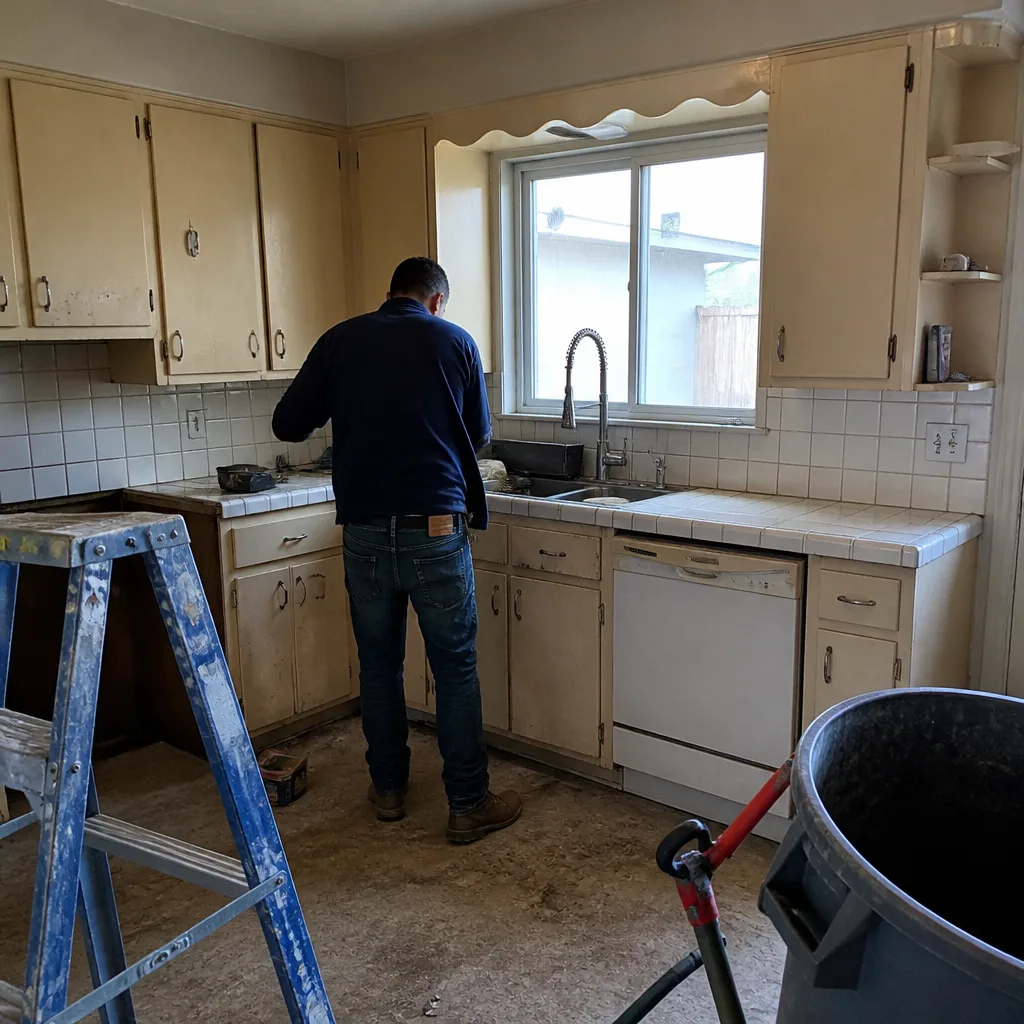 Before
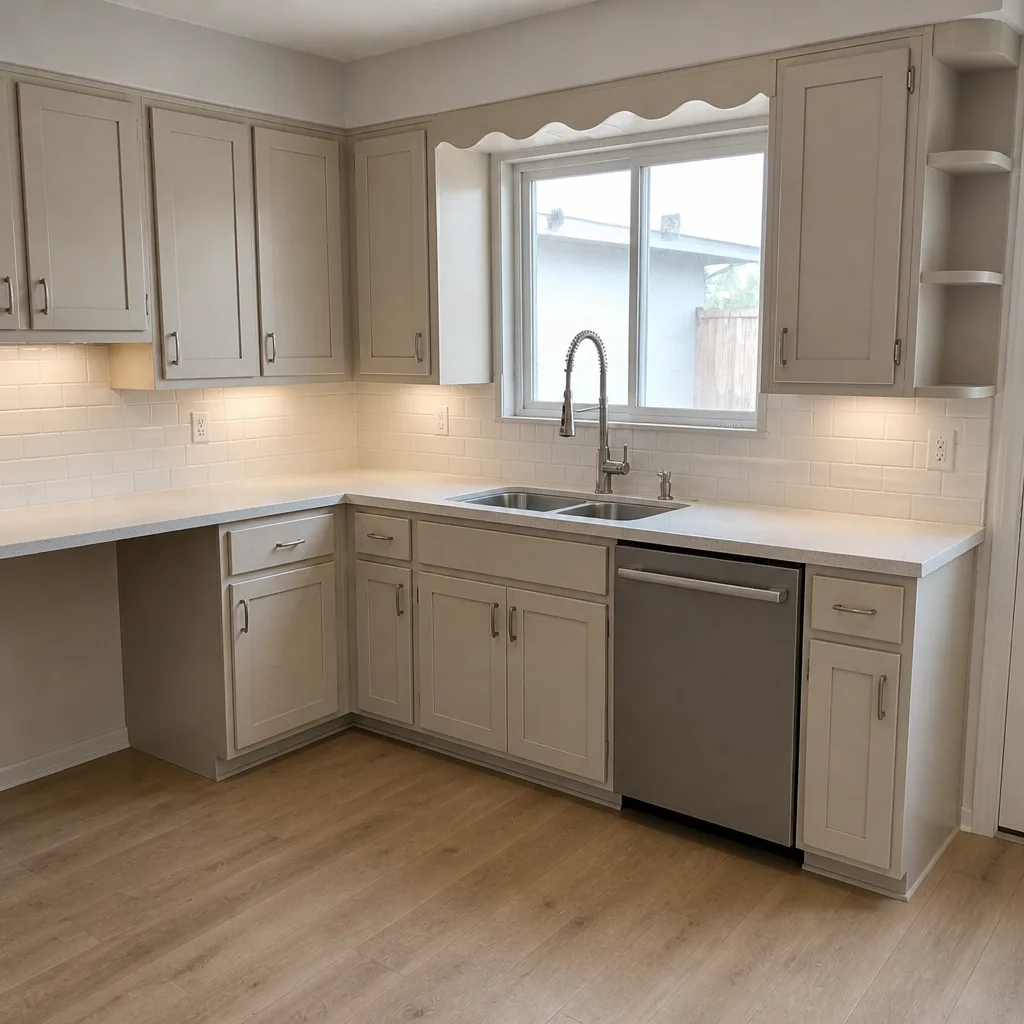 After
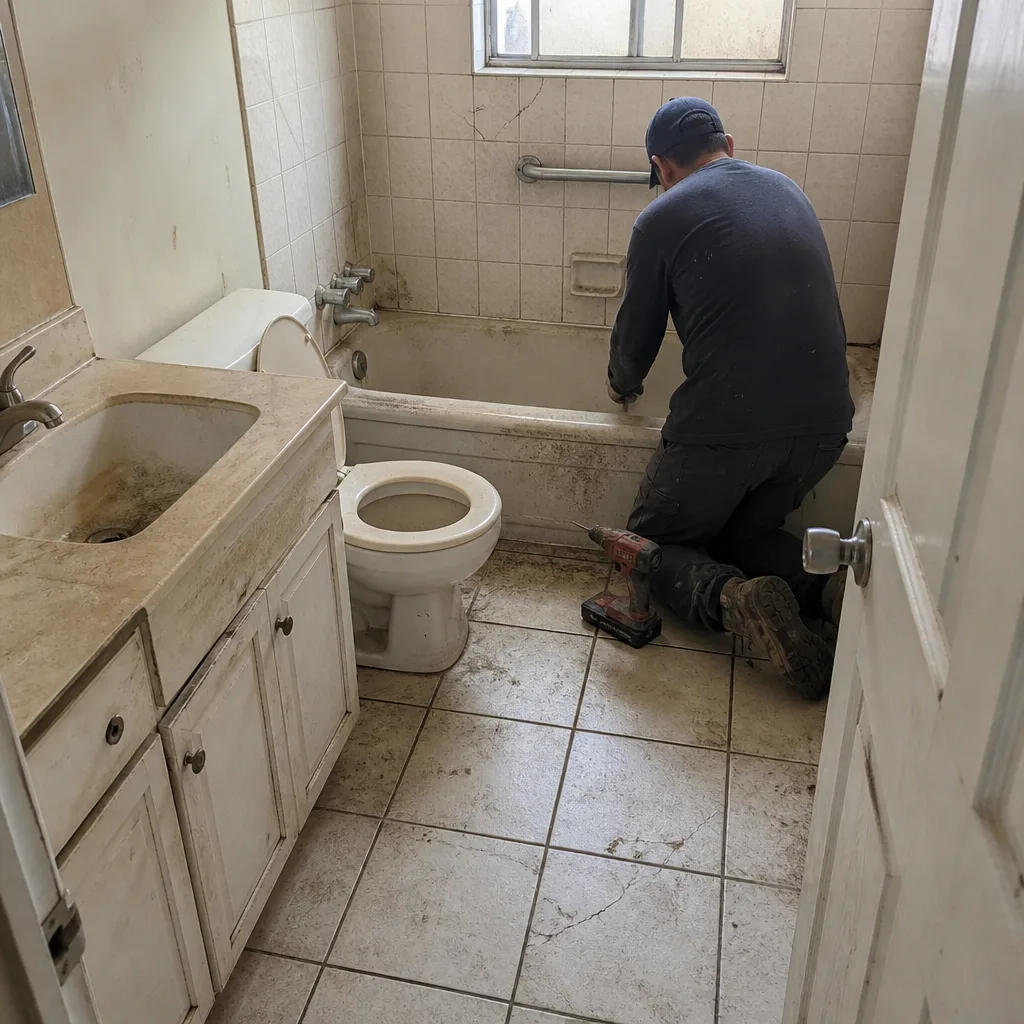 Before
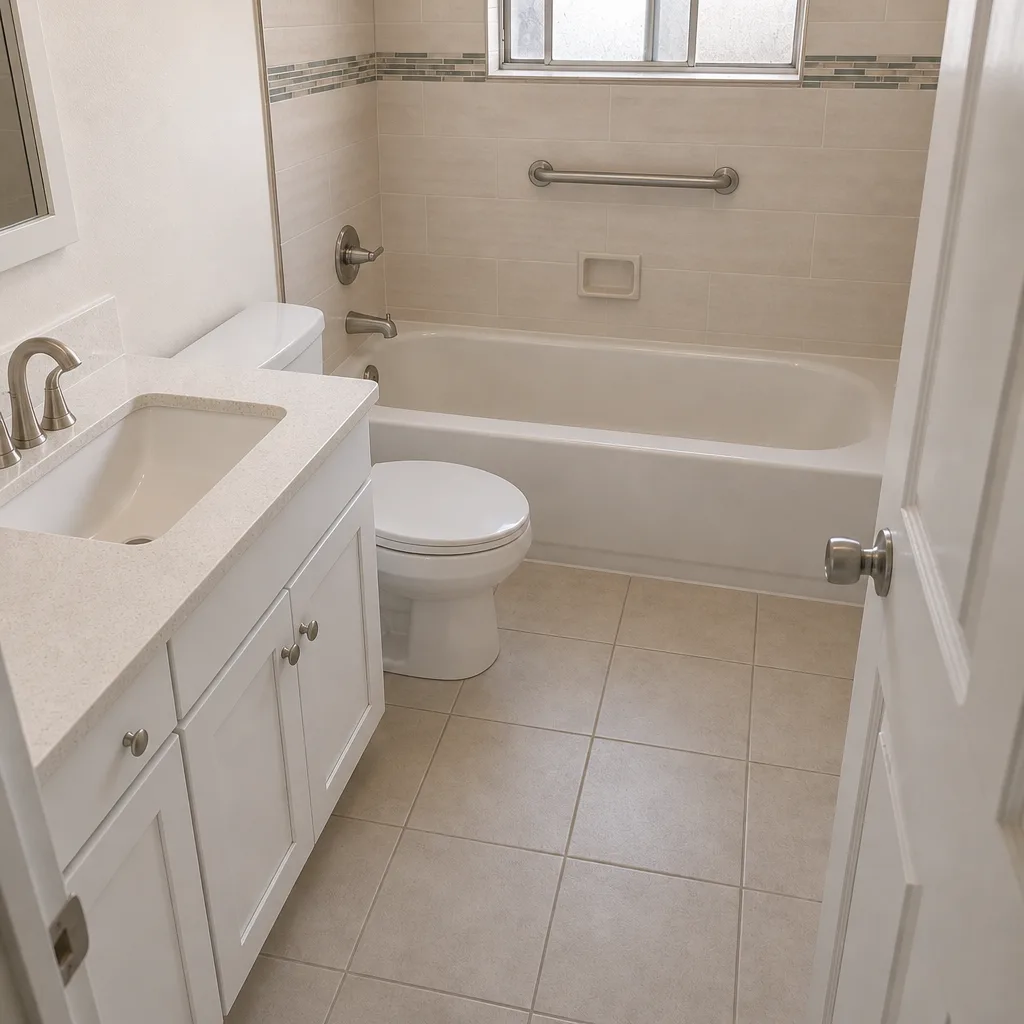 After
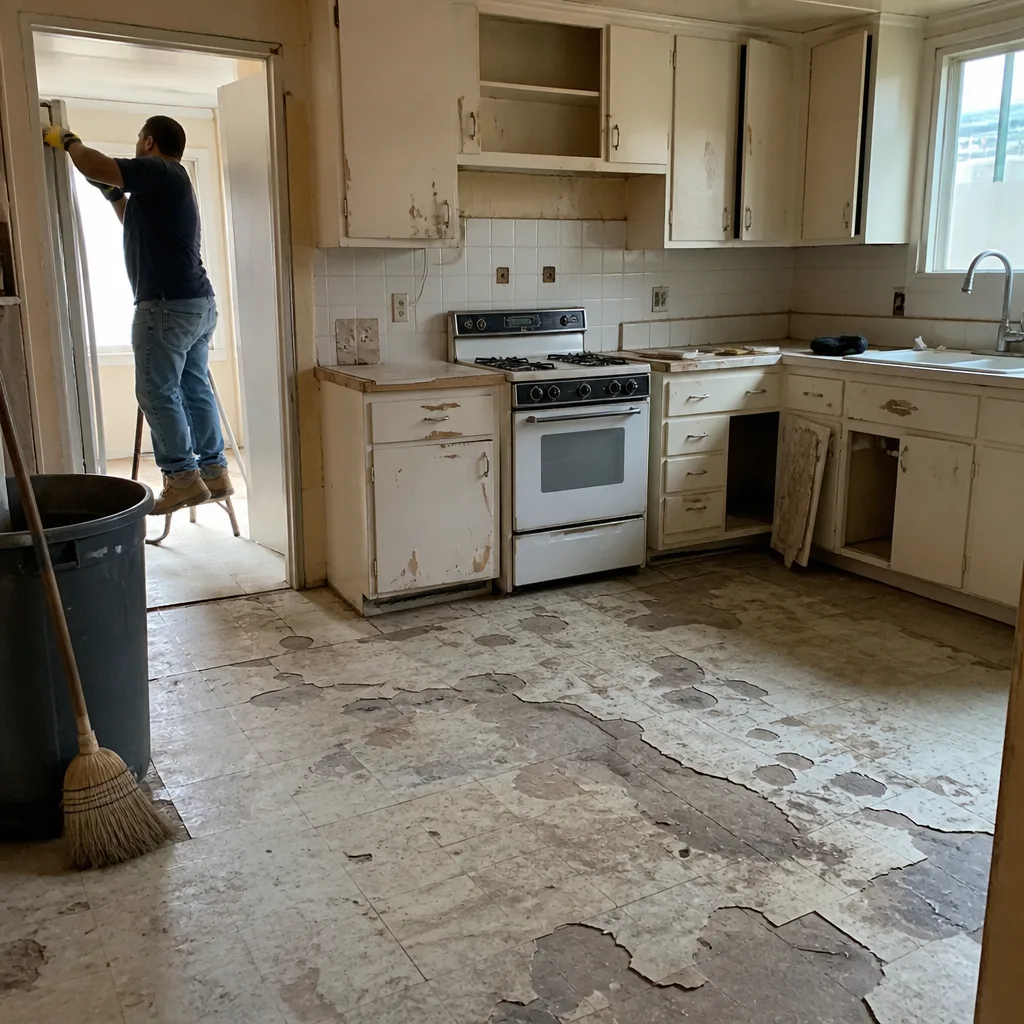 Before
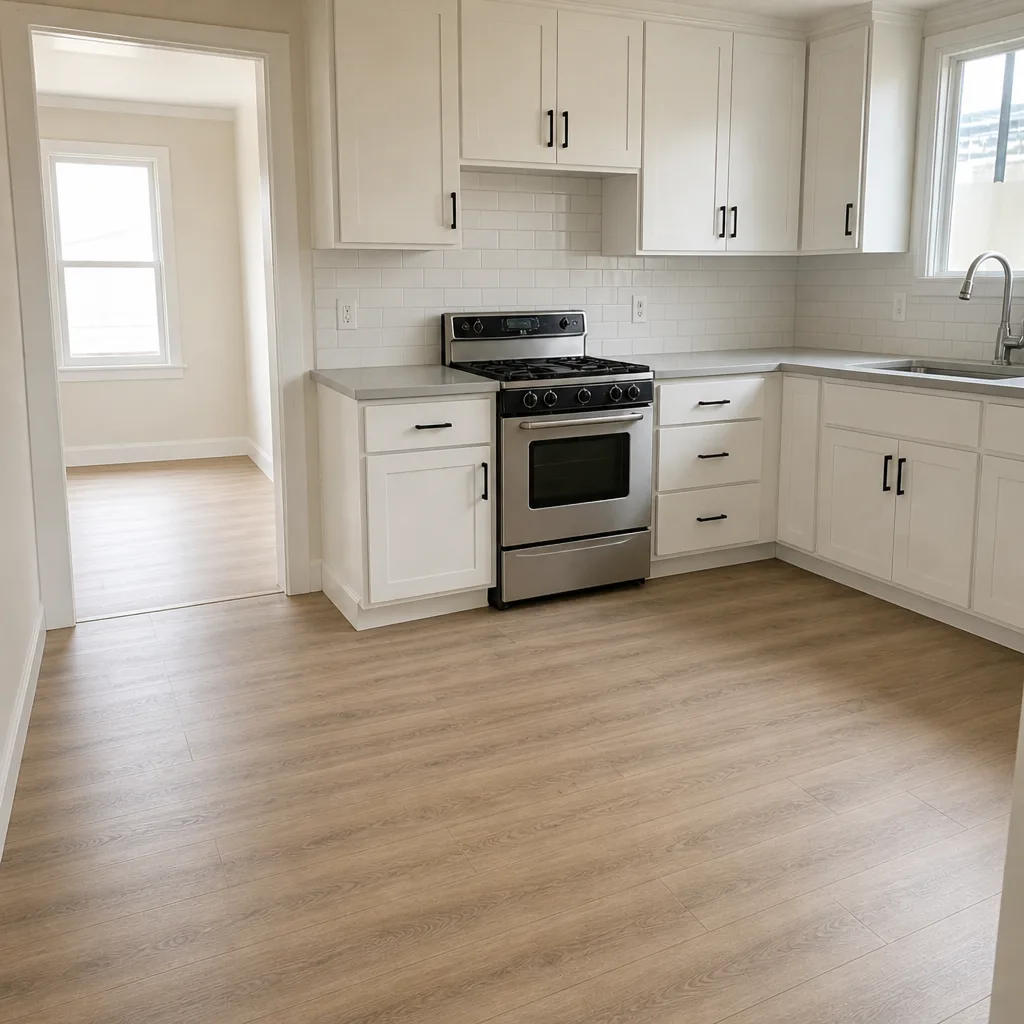 After
When to Call a Professional
Call a professional when the warning sign involves structural movement, water getting behind a finished surface, or anything you can’t safely inspect. Specifically: a horizontal foundation crack that bows inward, attic condensation or moisture you can’t trace to a source, a retaining wall that has started to lean or show horizontal cracks, a paver field with widespread settlement and standing water, or a door or window frame that has moved enough to open a visible gap.
The other scenario where a professional visit saves money is timing. Hairline cracks are not urgent, but the same crack tracked over six months can prove a failure is new or old. A professional visit at the right moment saves both repair cost and the damage caused by acting too late.
We’ve been the general contractor on Hayward projects that touch the driveway, the fence, the roof, and the interior fixtures. When that warning sign crosses a trade line, we’re the one number to call. Construction Hayward offers free estimates in Hayward. Call (833) 510-5312. We answer 24/7. Fast dispatch from 7am to 7pm, Sunday through Friday.
Frequently Asked Questions
A diagonal crack that opens and closes with the seasons, especially one mirrored on the opposite wall, is the most reliable early sign. Hayward’s expansive clay amplifies this pattern because soil movement is tied to seasonal moisture cycles, so a crack that changes width across the year is showing you the cause. Document it with a fixed reference object and photograph it every season; if it keeps widening, call a professional before the next wet season.
Pattern and change over time tell you more than size. Vertical cracks that stay the same width are usually settling and don’t need a repair. Diagonal cracks widening with distance, stair-step cracks in masonry, or any horizontal crack in a foundation wall are patterns that warrant a professional look. If you’re not sure, photograph the crack with a coin or ruler for scale and compare in three months. Call (833) 510-5312 for a free estimate if you’d rather have eyes on it sooner.
Expansive clay soil pushes and pulls on footings and wall faces with every wet-dry cycle. That’s why lean direction and post base corrosion are the two indicators worth checking first. If your fence posts are leaning the same direction along a run, the soil and drainage around the whole line is likely involved, not a single post. A quick footing and drainage assessment often saves the cost of a full replacement.
Not necessarily. Condensation in the attic usually points to air sealing or ventilation, not a failed roof surface. If the sheathing is damp, insulation is compressed near the eaves, and paint is bubbling along the top plate, the sequence is consistent with warm interior air condensing on a cold roof deck. Fixing the air seal and ventilation first is cheaper than replacing a roof that may still have years of life.
Three signs separate base failure from surface wear: individual pavers that rock when you step on them, widespread settlement near the edges or middle of the drive, and standing water that doesn’t drain after rain. If you see all three, the base compaction layer needs rebuilding, not just surface relaying. If you only see color fading or joint sand migration, that’s surface wear and cheaper to address. Call (833) 510-5312 for a free estimate to confirm which you’re looking at.
Build a photo history with one fixed object for scale and a consistent date in the file name. A single photo shows a crack; a series shows whether it’s changing. Include one wide shot and one close-up for each issue, and note the season so a contractor can connect the pattern to clay soil movement. When you have the record ready, the conversation is faster and the estimate is more accurate.
The Bottom Line
Most expensive construction problems announce themselves early in small, patterned ways: a crack that changes width, a leaning fence run, a damp spot in the attic, a paver that rocks. The trick is reading these signs by pattern and location rather than by size, and then keeping a record so you can tell whether the situation is stable or moving. If you’ve found something on our checklist, we have the whole-property view to help you decide what actually needs fixing now and what can wait. One contractor from the driveway to the kitchen means the warning sign crossed a trade line doesn’t leave you coordinating five calls. Our technicians have up to 11 years of experience across those trades, and the written estimate is what sets your price. Call (833) 510-5312 for a free estimate. We answer 24/7. Fast dispatch from 7am to 7pm, Sunday through Friday.
Start with the exterior and work inward. Our Construction Hayward guide covers how the driveway, fence, roof, and interior systems connect, so you’re not assessing one trade in isolation.
Written by the team at Construction Hayward.