
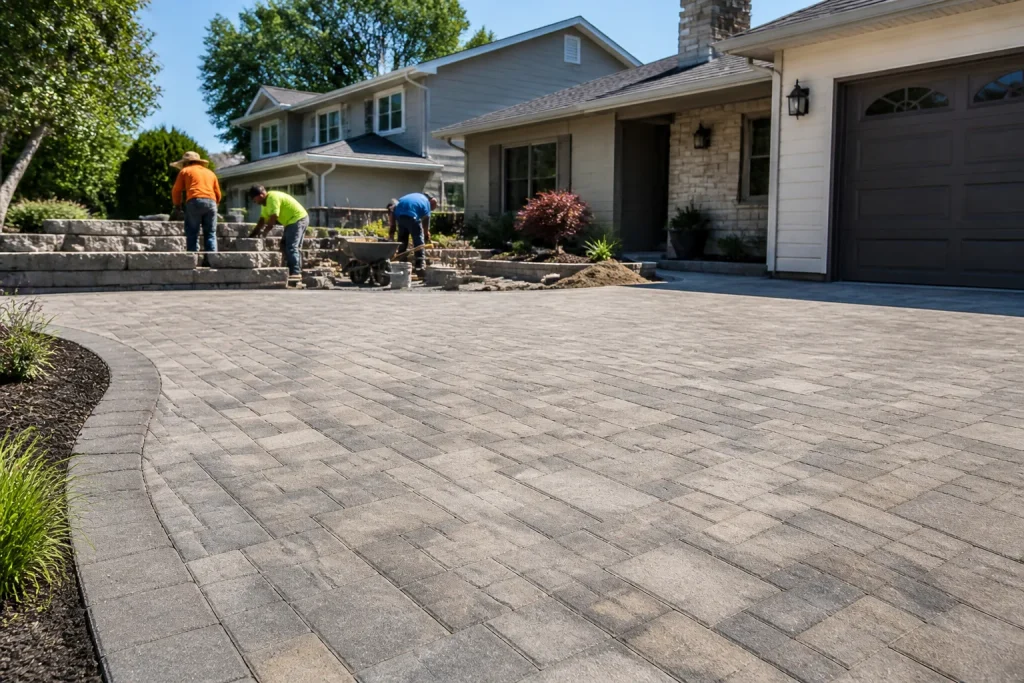
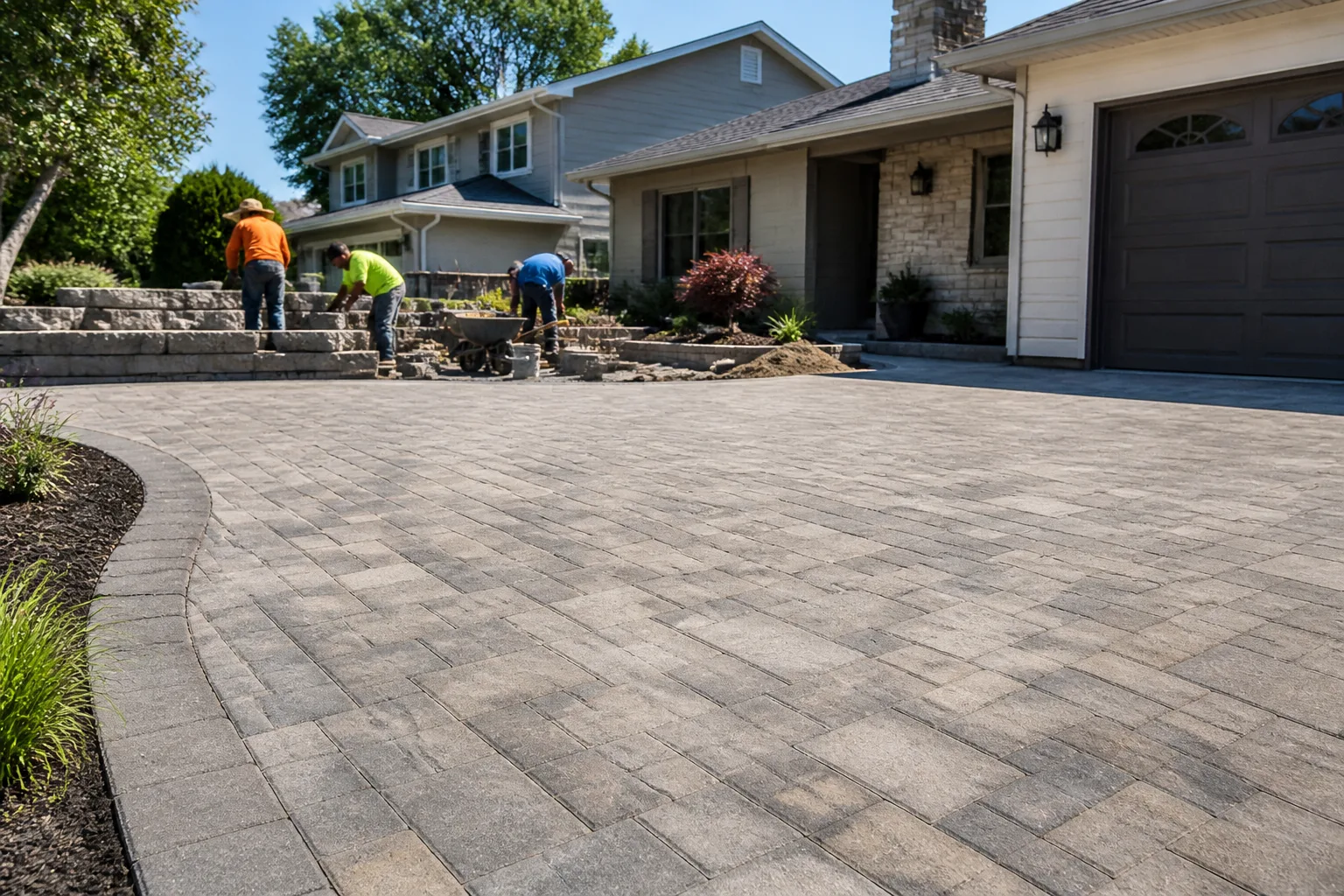
Driveway & Pavers Near Me: How to Choose a Local Construction Company in Hayward
Any contractor can lay pavers on top of a bad base and have it look perfect for 18 months. The ones who do it right are the ones whose work still looks right after three East Bay rainy seasons. If you’re searching for “driveway pavers contractor near me” in Hayward, the real question isn’t who quotes the lowest number. It’s who specifies the right base depth, pulls the encroachment permit, and will still answer the phone when the ground shifts in year two. Here’s how to tell those contractors apart before you sign. If you’d rather not sort through bids yourself, call (833) 510-5312.
What should you actually look for in a Hayward paver contractor?
Look for a contractor who can explain the base, the edge restraint, and the permit in plain language. Those three things decide whether your driveway lasts a decade or starts rocking loose in two winters. Hayward sits on clay-heavy East Bay soils that expand when wet and shrink when dry, and a driveway built over that soil without the right compacted aggregate base will move. The pavers themselves are rarely the failure point. The base under them is.
Any contractor you talk to should be able to tell you, without checking notes, how deep their base goes and why. In our experience, the bids that look suspiciously cheap are usually the ones quietly cutting base depth or skipping a geotextile layer. Ask what happens to water that reaches the driveway edge, because Hayward’s rainy season sends a lot of runoff downhill fast. A contractor who only talks about paver color and pattern, and never about drainage or soil, is selling you a surface treatment. You want someone who builds a driveway.
- Base specification: what depth of compacted aggregate, and what material, over your native Hayward soil.
- Edge restraint: pinned, glued, or poured concrete edge, and how it locks the field in place.
- Drainage plan: where water goes and whether the slope carries it off the driveway.
- Permits: who pulls the encroachment permit if the work touches the sidewalk or the street.
- Warranty terms: what’s covered, for how long, and what voids it.
Which license should a paver contractor have in California?
For hardscape work in California, check for a current C-8 (Concrete) or C-29 (Masonry) license, and verify it yourself on the CSLB website. Both matter because driveway and paver work straddles the two: the base and any poured elements lean concrete, while the setting, cutting, and jointing lean masonry. A contractor working legally on hardscape will hold one or both. Some hold neither.
Verification takes about two minutes. Go to the Contractors State License Board lookup, type in the license number the contractor gives you, and confirm three things: the status reads “active,” the classification matches the work, and the name on the license matches the name on your contract. A license that’s expired, suspended, or listed under a different business name is a reason to walk. Ask specifically whether the company carries both a C-8 and a C-29 where relevant, because a firm that understands concrete base work and masonry finish together tends to catch interface problems earlier.
Licensing is a floor, not a ceiling. A current license and a real certificate of insurance are the minimum before anyone touches your property. Ask for them, and don’t feel awkward doing it. The professionals expect the question.
Why does a single-trade paver specialist create coordination risk?
Most driveways don’t exist on their own. A driveway in Hayward usually connects to drainage, a fence line, a walkway, or landscaping at the edges, and that’s where single-trade specialists run into trouble. The paver crew builds to their scope and leaves. The drainage gets handled by someone else. The fence goes in later, and now it’s anchoring into fresh paving edges. Nobody owns the seam between the trades, so the seam is where you get problems.
We’ve seen what that looks like: a paver job finished cleanly, then a separate fencing crew two weeks later drilling into the new edge restraint and cracking it, with each contractor pointing at the other. Hardscape, drainage, and fencing share the same ground. When those trades sit under one contractor, the interfaces get planned instead of discovered. That’s part of why we work across the full property – the same company handling your driveway & pavers can coordinate the fence that borders it and keep the two from fighting. It also means if your project grows toward an addition, you’re not starting over with a stranger; our home additions & ADU work plugs into the same project management.
If your driveway is truly standalone with no shared edges, a good specialist can be fine. But be honest with yourself about the interfaces before you decide. If a fence, a drainage channel, or a landscape wall touches the paving, ask how those get coordinated.
What should a legitimate base inspection look like mid-project?
A legitimate base inspection happens after excavation and compaction but before a single paver is set, and you should be invited to see it. That’s the tell. The compacted base is the one part of the job that goes permanently hidden. A contractor who’s proud of the base will walk you out to the driveway, show you the grade, point out the depth against a stake, and explain the compaction. A contractor who gets defensive when you ask to see it is telling you something.
What you’re looking for at that stage:
- Clean excavation down to the specified depth, no soft spots or debris left in the trench.
- Aggregate evenly spread, not mounded, with the slope clearly carrying water away from the house.
- Edge restraint in place or staged, not an afterthought.
- Straightforward answers when you ask how the compaction was checked.
In Hayward, that pre-paver inspection matters more than usual because the climate swings. Wet winters soften clay soil, and dry summers shrink it. A well-compacted base with geotextile separation handles that cycle. A thin, loosely compacted base does not, and no amount of beautiful paving on top will save it. Ask the question. See the base. Every time.
How do you read a paver proposal for scope gaps?
Read a paver proposal for what it doesn’t say. Vague contracts hide their gaps in the missing details: a base depth written as “as needed,” a material listed without a brand or style, a warranty phrased as “contact us” with no terms. A professional proposal names the base depth in inches, specifies the paver brand and style, states the edge restraint system, and spells out the warranty in real terms. If you have to guess what’s included, it isn’t.
Here’s what separates the two:
- Base depth: stated in inches. “As needed” or a blank line is a red flag.
- Materials: named brand and style, not “paver, color to be determined.”
- Edge restraint: the specific system, since a loose edge is what trips people.
- Permits: explicitly listed as pulled by the contractor or by you. That gap costs you later.
- Warranty: named terms, exclusions, and who you call. “Guaranteed” with no detail means nothing.
- Change orders: how they’re handled and what triggers one.
Product specification is where the choice pays off. We work with brands like Belgard, Techo-Bloc, and Unilock across architectural and budget tiers, and with fence lines like Ameristar and Jerith when the perimeter gets redone in the same project. You choose the material; we handle the rest. A proposal that names those products up front is a proposal that finished its homework.
When to call a pro
Call a professional the moment your project touches a permit, a property line, or drainage, or the moment the base is more than a thin layer of material. That covers most real Hayward driveways. Paver work looks approachable on video, and a small square pad is genuinely a weekend job. But a full driveway over expanding clay soil, with an edge restraint and a slope that has to carry water, is not the place to learn by doing. The mistakes go underground and stay there.
Related services in Hayward: fence installation for the perimeter that borders your new paving, and Construction Hayward for the full scope when the driveway is one piece of a larger plan. Our technicians have up to 11 years of experience, and we can talk specifics on base, materials, and permits without the sales pitch.
The Bottom Line
Choosing the right paver contractor in Hayward comes down to three checks. Verify a current C-8 or C-29 license on the CSLB site. Confirm the proposal names a base depth, edge restraint, material brand, permit responsibility, and warranty terms. And insist on seeing the compacted base before any paver goes down. The contractor who welcomes that inspection is the one whose driveway still looks right after three wet East Bay winters. The one who dodges it isn’t.
If you’re in Hayward and need help sorting any of this out, Construction Hayward offers free estimates – call (833) 510-5312. We answer 24/7. Fast dispatch from 7am to 7pm, Sunday through Friday.
Frequently Asked Questions
Pricing is set per job by a written estimate, and it depends on square footage, base depth, material tier, and whether a permit is needed. That’s why we quote after looking at the site rather than over the phone. Call (833) 510-5312 for a free estimate with a line-item written quote.
A general contractor is the safer choice when your driveway connects to drainage, fencing, or landscaping, because those interfaces get managed under one contract. A standalone pad with no shared edges can work with a specialist. If your project touches other trades, ask who owns the seams. Call (833) 510-5312 to talk it through.
Often yes, especially if the work touches the sidewalk, curb, or street frontage, since that requires an encroachment permit. Requirements vary by scope, so confirm with the city’s building department and make sure your proposal states who pulls the permit. Call (833) 510-5312 and we’ll walk you through what your project likely needs.
A typical residential driveway takes several days from excavation to finish, with base prep and compaction taking as long as the paver laying itself. Rainy-season scheduling in the East Bay can stretch it. The exact timeline goes in your written proposal so there are no surprises. Call (833) 510-5312 for a free estimate.
Written by the team at Construction Hayward.
Need Construction Help?
Call Construction Hayward - licensed & insured, with free written estimates in Hayward.
(833) 510-5312